

Why Fashion Magazines Are Still the Real Trendsetters


You suddenly see a new style everywhere. On your social media feed, in stores, on the street. It has come out of nowhere. But did it?
Most of the time, it started somewhere else. It began in the pages of a fashion magazine.
It’s easy to think magazines are old news. We have endless style tips online. But those glossy pages? They’re not just surviving; they’re still calling the shots. Here’s the real story on why.
They Don’t Just Follow Trends—They Build Them
Think of the internet as a busy, loud street market. Everyone is shouting. It’s exciting, but it’s chaotic. A fashion magazine is like a trusted guide who takes you by the hand and says, “Okay, here’s what’s actually important this season.”
They have the time, money, and access that most influencers and bloggers simply don’t.
Power of the “Editor’s Eye”
Magazine editors don’t just pick clothes they like. They go to all the major fashion shows in New York, London, Milan, and Paris. They see hundreds of collections. They spot the common threads—maybe every big designer is using the colour blue or a specific type of shoulder pad.
They then translate that high-fashion world into something you can actually understand and wear.
A Simple Example:
- What designers showed: Dramatic, floor-length sequin gowns.
- What magazines told us: “Sequins are back! Try a sequined top with your favourite jeans.”
They take an overwhelming idea and make it practical.
Practical Tip: Next time you flip through a magazine, don’t just look at the crazy outfits. Look for the one piece in a photo that you could actually see yourself wearing. That’s the trend they’re trying to sell you.
It’s More Than Clothes—It’s a Whole World
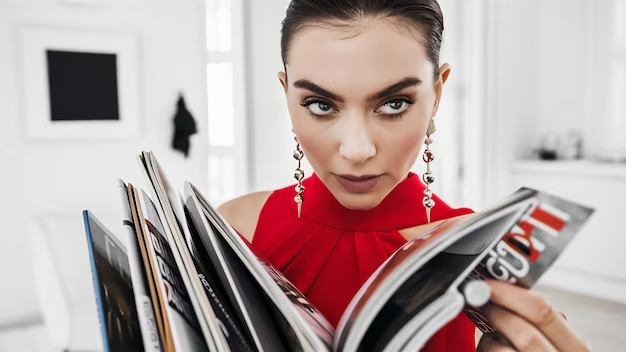
A 30-second TikTok video can show you an outfit. A magazine tells you a story with that outfit. This storytelling is what makes a trend stick.
Magic of the Fashion Spread
Those big, beautiful photo spreads with models in exotic locations? They’re not just pretty pictures. They’re selling a mood, a fantasy, a feeling.
When you see a model wearing a flowing dress on a windy beach, you don’t just see a dress. You imagine the freedom and romance that the dress represents. You connect with it emotionally. That’s a much more powerful reason to buy into a trend than just seeing a product on a white background.
This creates a “trickle-down” effect:
- Magazines feature high-end designer looks in creative stories.
- Celebrities often wear toned-down versions on the red carpet, which magazine editors frequently style.
- High-street stores (like Zara and H&M) create affordable copies.
- Influencers buy those copies and post about them.
- You see it everywhere and might finally make a purchase.
The magazine started the chain reaction.
Trust Factor: They Have to Get It Right
Anyone can start a fashion blog or an Instagram account. There’s no test to pass. But fashion magazines have been around for decades. Names like Vogue, Harper’s Bazaar, and Elle have built their reputations over the course of a century.
This gives them a tremendous amount of authority.
- Expert Curation: Their editors are seasoned professionals. Anna Wintour, the legendary editor of Vogue, isn’t famous for being trendy; she’s renowned for her excellent taste and vision. People trust that she knows what’s good.
- Accountability: If a random TikTok account gets a trend wrong, nothing happens. If a major magazine consistently gets it wrong, it loses readers, advertisers, and its cultural influence. They have a lot more to lose, so the bar for quality is much higher.
As Robin Givhan, a Pulitzer Prize-winning fashion critic for The Washington Post, once said, “Fashion magazines provide a point of view. They are a filter for the vast amount of information that’s out there.” [Reference: The Washington Post]
They are the trusted filter in a world of noise.
They Connect the Dots Between Fashion and Everything Else
Fashion doesn’t exist in a bubble. It’s connected to our movies, music, politics, and daily lives. Magazines are excellent at highlighting these connections.
Cultural Hub
A single issue of a magazine will contain:
- An interview with an actor about their new movie and what they wear.
- A feature on an artist, with photos of their studio.
- An article about a social issue.
- Beauty tips that tie into the season’s fashion colours.
By doing this, they make fashion part of a bigger conversation. They demonstrate how the “military trend” in jackets may reflect a broader societal mood, or how a return to “cottagecore” and soft dresses is a reaction to our fast-paced, digital lives.
Practical Tip: Try reading a fashion magazine article from start to finish, not just looking at the pictures. You’ll often find the clothes make more sense when you understand the story behind them.
So, How Can You Use This Today?
You don’t need to buy every issue of every magazine to be stylish. Here’s how to use their power smartly:
- Look for the Pattern, Not the Outfit. When you browse a magazine (online or in print), look for repetition. Are they showing chunky loafers on five different pages? That’s a trend. Are all the models wearing sheer fabrics? That’s a trend. You’re looking for the “editor’s eye.”
- Adapt, Don’t Copy. You see a head-to-toe pink leather outfit. You love the energy but wouldn’t wear it. So, adapt it. Maybe you buy a pink leather bag or a pink hair clip. That’s you participating in the trend in your own way.
- Follow the Experts. Many famous magazine editors and stylists are on social media. Follow them! People like Stacey London or Tan France share professional insights that are more valuable than a random “haul” video.
- Use Their Archives. The internet is forever. Look up “Vogue Paris 1990s fashion spreads” on Google. You’ll see where today’s trends came from. Understanding the past is the key to comprehending the present.
A Quick Comparison: Magazine Trendsetting vs. Social Media Trends
| Feature | Fashion Magazines | Social Media Influencers |
|---|---|---|
| Speed | Slower, seasonal | Instant, weekly |
| Focus | Storytelling, fantasy, artistry | Products, hauls, direct links |
| Authority | High (decades of reputation) | Varies widely |
| Depth | Deep cultural context | Surface-level, immediate |
| Your Role | Reader, dreamer | Follower, customer |
Bottom Line
Fashion magazines are the architects, while much of social media is the construction crew. The architects draw the blueprints, set the vision, and define the building’s shape. The construction crew (influencers, fast-fashion brands) builds it, making it accessible to everyone.
So, the next time you notice a new trend taking over, take a look at a fashion magazine. You’ll probably find it was there all along, waiting for you to discover it. They are the quiet, steady voice in a noisy room, and it seems we’re still listening.